Strength You Can Grade | Standardization of Assessments
A practical way to assess and grade lower and upper body strength
This article will serve as a follow up to this blog post about how do we define strength. It is not the follow up that I teased about with more specific exercises - that one will come. I had a high school coach follow up with me from a convo we had and I want to share it with you all because it might help you as well. This coach is a strength and conditioning coach who also teaches classes during the day (maybe this is your current world)
Simple Strength - Lower Body
I am calling this article simple strength in the same way Dan John wrote the program EZ Strength. If you are a S&C coach in the role that I mentioned above, you are dealing with kids who do not care about S&C. That is ok - you need to teach them some things. It is not your job to make them love S&C. You are not a bad coach if they do not become meat heads and love to smash weight. It is your fault if they get hurt doing something they shouldn't do. This begs the question - what should and shouldn't these kids do?
Thanks for asking. 99.9% of them will not need their lower body strength assess with a back squat? Why? For these kids who are in your strength and conditioning class, there is a HIGH likelihood that they don't want to be there, and they will not have the proper technique to get under the bar and squat to parallel with good technique. (Side note - can we please stop calling squats that are not femur parallel back squats - just call it a sport squat and move on. Unless it is USAPL femur parallel it is not a back squat).
Now, what should these kids do in your classroom that can grade them on lower body strength. There is the all important piece of this - how can you grade them. Now you are dealing with parents, admin, other teachers - welcome the world of politically correctness and red tape. You. need to be able to show progress (or lack their off) to support the letter grade that you give little Johnny or little Sally. Failure to do so and if you give them a bad grade = you getting calls to explain the grade. Insert using your IMTPush test with all students in your class.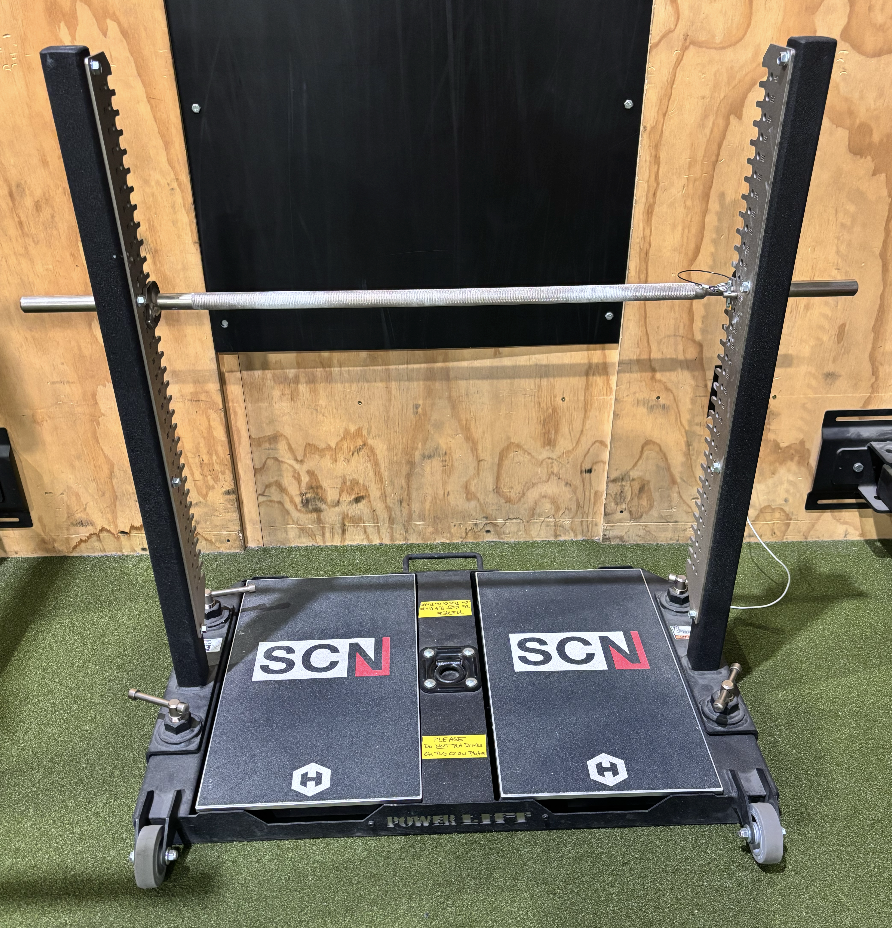
With the set up that you see above you are able to use your Hawkin Dynamics force plates inside the Power Lift rig to get IMTP data on all your athletes. The side adjustment is incrementally set so you can put the bar EXACTLY where you want to have it. I personally recommend you add the heights as a tag on your Hawkin software - this way you and everyone know where an athlete got their number from.
This high school coach saw this set up and realized this would be the key for him to be able to assess strength over the course of the semester - and thus be able to give letter grades.He also realized he would be able to set norms based on the force produced by the athletes. For us at Goldfinch we have 700, 800, and 900 pounds of force for the boys as the levels; and for the girls it is 600, 700, and 800. In the above example that 3872N would be multiplied by 0.225 to get 871lb force - and this athlete gets up on the board in our weight room.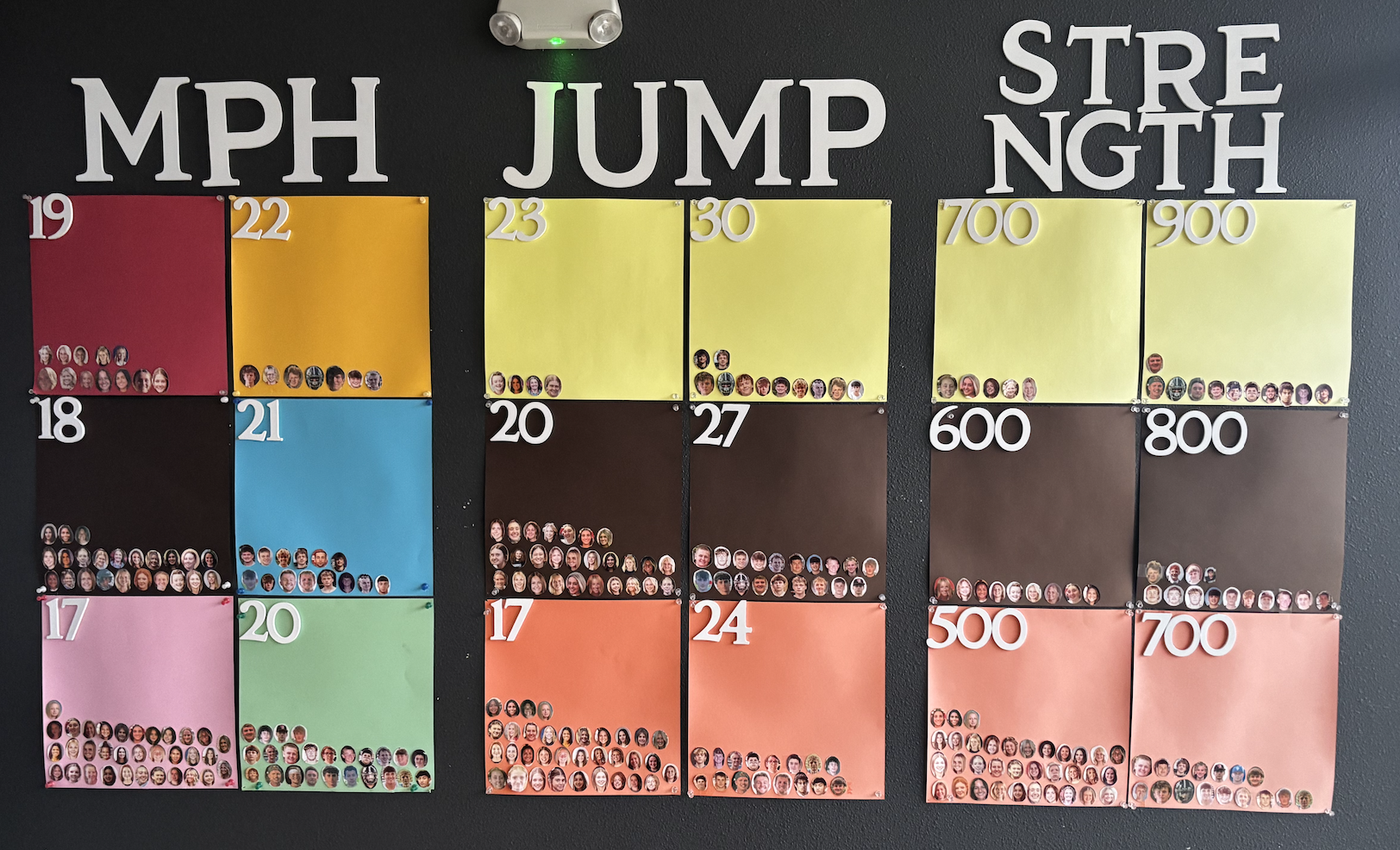
And this is our athlete wall of fame (yes we print off pictures and hang a real plaque).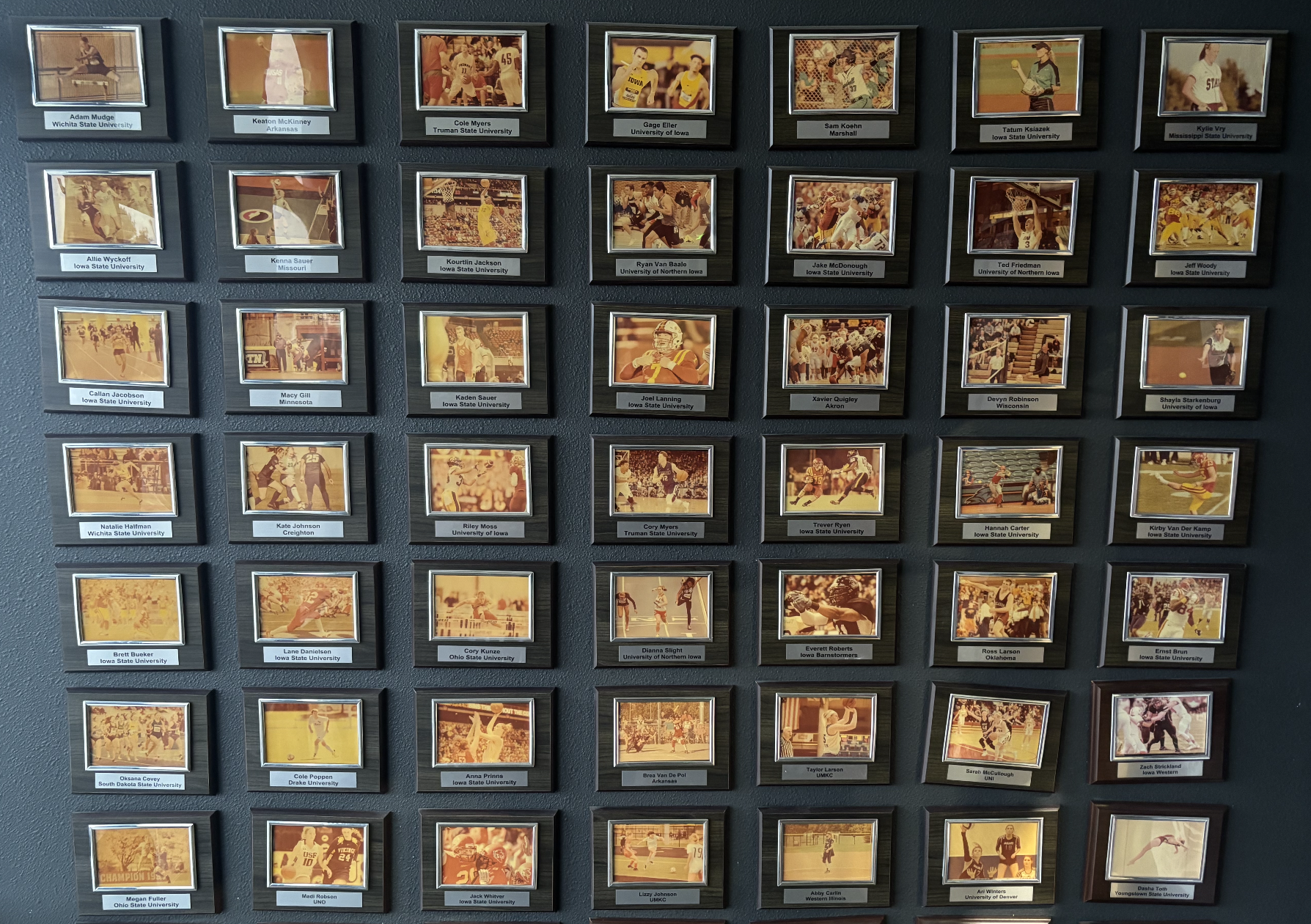
Simple Strength - Upper Body
This coach was still stuck though because he does not want to have to bench press all of his students to show progress and help with letter grade assignment. Insert the upper body IMTP that I have been talking about for a while now.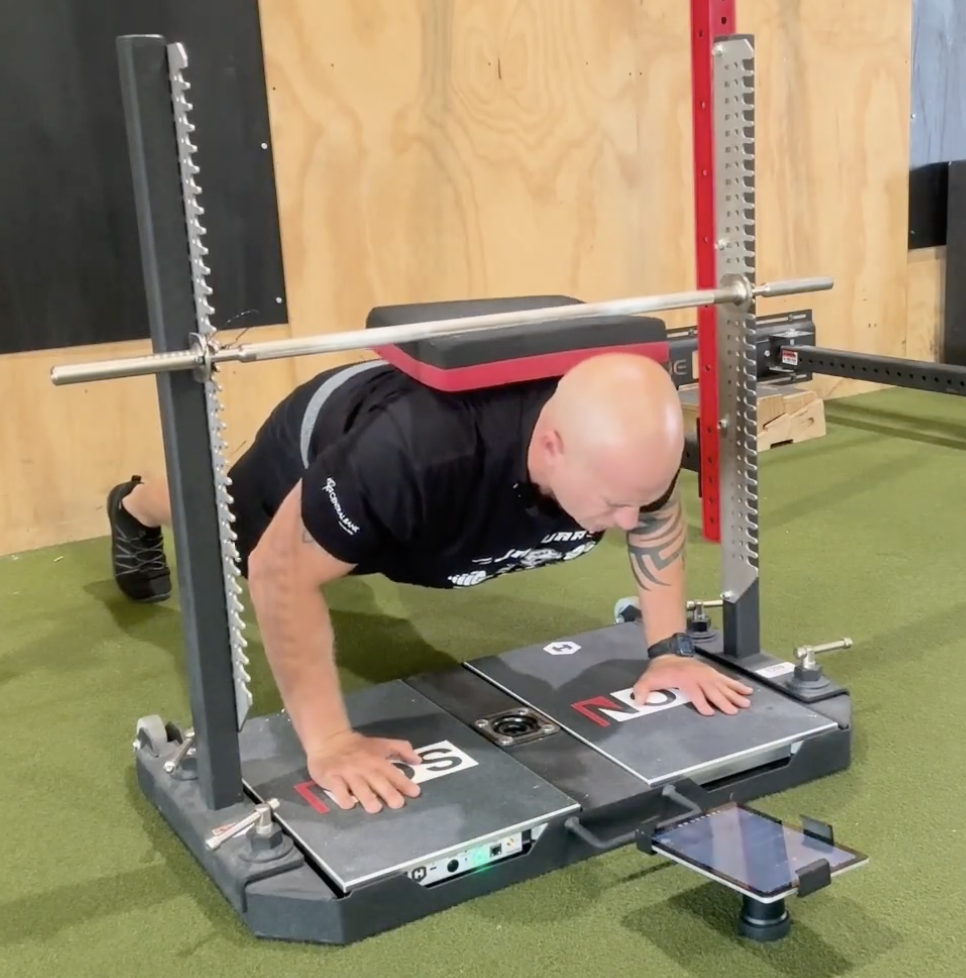
By using the same Hawkin Dynamics force plates and Power Lift rig (now with the addition of an airex pad) I can get the exact height for the strongest IMTPush with my hands on the plate. I am still working on the name of this upper body IMTP test. Maybe upper body IMTP is the best name since we all know what we are talking about. If you have a better name for it please email us and tell us what to call it. How I tag this is with the two tags "upper body" and "height of bar".
I am still in data collection mode for what the upper body IMTP scores will be for getting people on the board here at Goldfinch - but it is a work in progress. I told the high school coach the same thing. Maybe for him the numbers are 300, 400, and 500 for female; and 400, 500, and 600 for male. Maybe it is less. I don't know - and neither does he, but what we agreed on is he will start collecting data and showing progress with the students (if you are collecting this metric too and want to share what the pound of force you found please also email us!)
Simple Strength For All
You might be saying to yourself, well Justin I don't work in the high school setting so I don't have to give letter grades to kids - this article doesn't help me. Wrong. I work in the private sector and this applies to me. We want to show moms and dads that their kids are getting stronger - this allows us to do so for the upper and lower body (in addition to the other metrics we assess). It also applies if you work in college, pro, or tactical S&C. How? Think about this as an insurance policy you are paying for once every 4-6 weeks. If you assess lower and upper IMTPush (remember it is a push not pull when you hold our push into the bars - that from Dr. Force Plate himself John McMahon).
When you do this with your roster you have up to date info on force production through their limbs. This might be done more frequently than your strength or power testing. Now if someone gets an injury playing sport you have recent data to use during the RTP process. This is especially key when you have a major injury and the surgeon will not let you do dynamic movement soon, yet you want to measure progress/show progress to the athlete. This isometric test has no movement (thus the name) and you can show the surgeon that the athlete is making progress and able to move on. This is exactly what we did at Towson and is what made me create the upper body assessment video at the top of this blog.
My goal with this blog was to plant seed that can turn into great ideas that help you where you work. Idk your exact situation, if you would like my guidance on this and you are a member of SCN reach out to us in the new forum on discord! If you are not a member of SCN yet check us out for a $1 trial here.
Dr. Justin Lima
Strength Coach Network